The Overturned
a liturgy for what cannot be saved
Hello. This post is about Death & Birds.
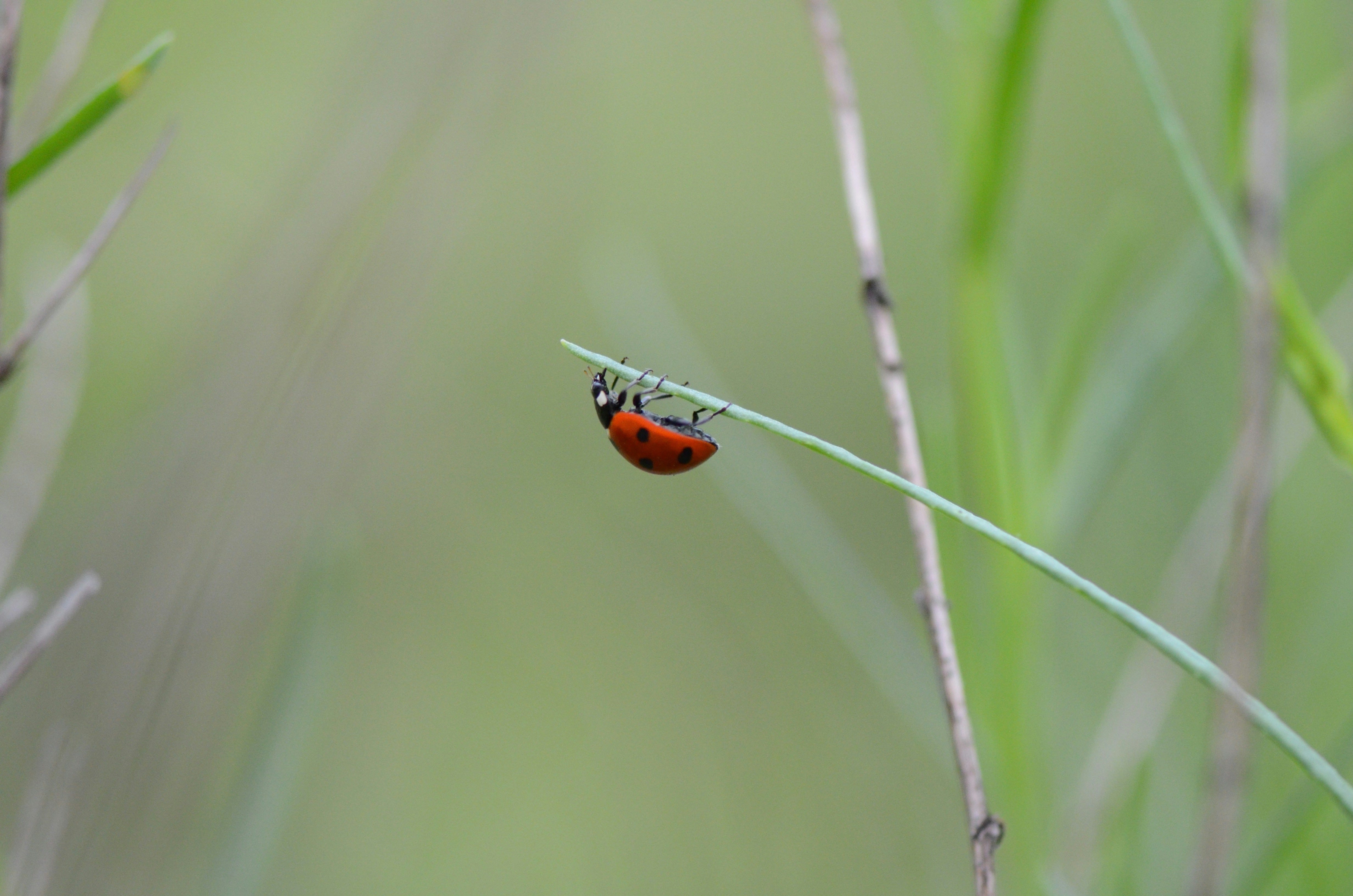
Over the last few weeks I have somehow become caught in a relentless cycle of relocating Ladybirds—or Ladybugs, for my friends in North America. David’s office is the designated ‘safe room’ for our tiny, colourful friends, and I’ll tiptoe in, hands cupped, trying not to disturb. “Another?” he’ll say, without looking up, as I deliver the bug to a windowsill lined with half-raisins and bottle lids of shallow water. Our little devotions blend into life like wallpaper. There is a twice-daily sweep for ‘the overturned’; the ones who fall onto their backs and cannot right themselves. It’s a logistical type of love and, essentially, a small liturgy for a world that I do not know how to save. I feel a certain kinship with ‘the overturned’. So often, these days, I find myself upside down, and reliant upon something larger than I to regain my footing. Death is surely larger than I, and I will sometimes wrap my thumb and fingers around my forearm, closing my eyes, picturing the bones therein. They tell me that I am temporary, and that I am made of the world. They remind me of how, somewhere in the area of spacetime we’ve labelled as ‘the future’, these bones are already dry, flesh-bare and exposed. And so the feel of their soft, warm current-day cover lands me squarely in the present—which, it seems, is the only place I am sane. Acknowledgement of my temporality rights me.
Speaking with a friend recently, we discovered that we had each independently witnessed people placing flowers on the dead bodies of Foxes, killed by cars in the city. The fact that these acts of compassion and acknowledgement were not isolated events replenished my much diminished reserves of hope. The news convinces me that the majority have been worn so thin by the constant onslaught of these times, that unbidden kindness has become a luxury too costly for most—but this is not true. Kindness sprouts in the darkest of places and care grows, like mycelium, through all beings. Ravens tend the injured, bringing them food1. Penguins2 and Crows3 adopt orphaned chicks. Tree stumps have been kept alive for decades, even centuries—fed by neighbouring trees4. Life, it would seem, leans towards life. There is a pull to tend, to keep each other alive. Yes, cruelty is rife and indifference thrives, but a deeper current exists. An ancient inclination to reach across the gap, and to feed what cannot feed itself. Even Death is a kindness to a body no longer able to home the life it once did.
As a young teen I was once in Spain, walking to the beach of a morning. Arriving at the sand, there was unease in the air, and a quiet, quite out of place. The judder of a distant helicopter grew closer and, behind a small gathering of people, a white sheet covering a narrow mound came into view. A woman approached, and began screaming. She clawed at herself, and at the man trying to hold her. Her grief so wild and so massive that a single body could not contain it, and so fragments of it landed in the body of every person on that beach. I still think of her, decades later, still offer the occasional prayer for her broken heart; alongside a prayer for all the many, many broken hearts. I learned, later that day, that the boy beneath the sheet had been killed by a passing jet ski. The incident shook the small seaside town, and conversations about the horror of what had happened drifted everywhere we went, for days. Talk of how tragic this Death was, how needless. How unnatural. Yes, I thought, how tragic. How needless.
The word ‘unnatural’, though, has always—to me—felt quite inappropriate to attach to Death. We’d never label a sunset, or a Winter as unnatural, and I fear that when we do so with any Death, we collapse the cause and the Death into one single thing. And our attention, our grief, our rage, can become, in part, misdirected. Our linguistics make Death wrong, but the wrongness—when there is wrongness—lives in what happened before. It lives in negligence, or violence, or in systems which have failed. But Death is always an entirely natural response to a body which, for whatever reason, is no longer able to sustain life. The cause may be preventable, unconscionable, incomprehensible—but the Death itself is as natural as the tides.
It has always seemed to me that Death is one of the world’s native languages. Spoken in cycles, in seasons, and in sudden full stops. It has the power to orient, to clarify, and to return us—both to the present, and to the everything.
Yours in aimless flight…
In light of recent and ongoing events, I feel compelled to state again: Death is not the enemy. Violence that results in preventable Death is the enemy. Fascism is the enemy. Rabid individualism, gaslighting and systemic cruelty are the enemy. Grief and rage deserve clear direction.
A prayer for all the broken hearts.
Acknowledgement of our temporality has the power to right us. The Deep End is a 6-module self-paced course for those seeking a relationship with Death that steadies rather than overturns:


The funny and beautiful thing about Chloe's writing is that, even when I have an overwhelming number of messages in my mailbox and feel too weary to read any of them, I cast my eyes over the first sentence of 'Death & Birds' and find myself transported seamlessly through it to the end where I feel better than I did before I began it.
Dear dear Chloe — there are no words for this utter horror here in the U.S. Perhaps the only consolation is in knowing that for all who intend harm, there are legions more who wish to help — who live acts of kindness over and over again. Thank you for reminding me of that, and for your great and tender and broken heart. I and so many, many people are grateful for your life and for you.