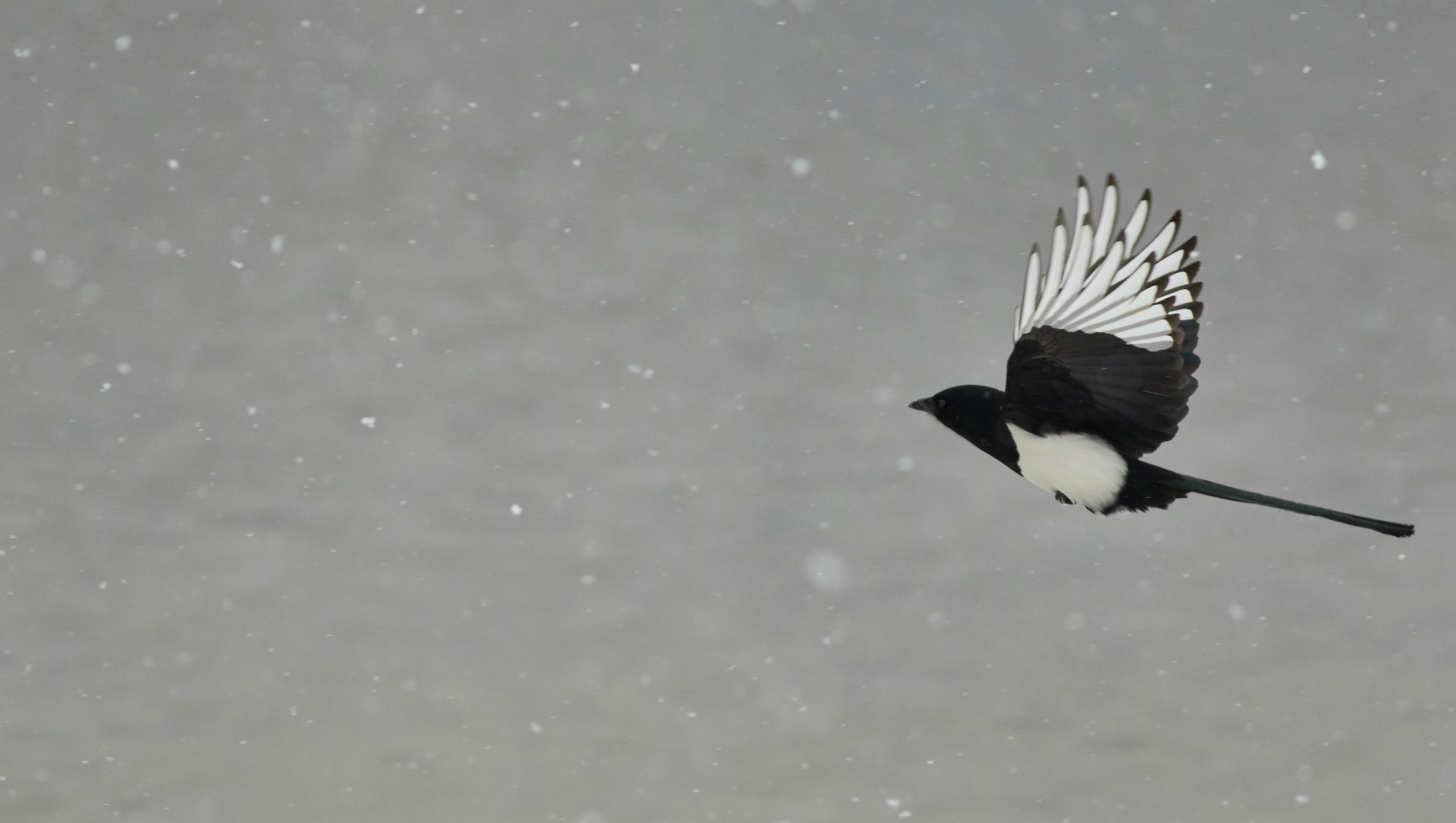
what remains
we are keel to keel
Hello. This post is about Death & Birds.
Recently, in the middle of the night, I was held within the grasp of some quite impressive physical pain. I felt distinctly as though there were shards of glass in each of my shoulder, elbow, wrist, and finger joints, with even the slightest of movements causing them to grind, pierce and slice. 2 a.m. always has a habit of welcoming uncharacteristic ways of thinking for me, but bring pain into the mix and things quickly get out of hand. The blend of darkness, cold, seeming solitude, and agony sees a narrowing of my thinking, a funnelling, whereby any potential for relief is chipped away to reveal only a point which swears that this, this suffering, is the only true thing—and not just in this moment, but the only true thing which has ever been. Nothing has ever been good; I have only been delusional. Nothing will ever be good, either, and the sooner this is accepted, the better. We should all stop heaving ourselves up the sheer face of this summit-less mountain of false hope and accept our fate. Happy New Year, by the way!
On these bitter Winter mornings, I watch Horses stand on frost-carpet fields, perfectly still as they allow the rising Sun to meet and warm them. As light pours into the day, vision and context broaden, and I, too, am met by the morning. It opens my cell door and smiles at me, while I sit holding the key. By the time the Sun finds its zenith, the distance from the quagmire of my night-spiral reveals it for what it is: a desperate attempt to make sense of something. Pain, it seems, is not enough. I need for my pain to mean something, to offer something, or to fit into a story that I can understand. How well worn the path of sense-making, how insistent the need for reason—and how violent the act of nailing words onto an ineffable thing. We do this with suffering, and we do this with Death. With Birds, too. The labels, the stories, the euphemisms, the Latin names—while necessary, to an extent—all reduce these mysterious universal stirrings to merely process, object, or burden. The sacrality of each, severed and discarded. Our ability to presence a thing without dominating it, slowly lost. I wonder, then, how I might become large enough to hold all of this. To contain the labels and the stories, and the mystery. To hold both the narrowing and the broadening, the pain and the witness to the pain. How vast might I need to become? These days see our species enlivened with resolve, with the intent to become anew. I suspect, though, that vastness—that the capacity to hold paradox, and pain, and all that we cannot make sense of, is in fact what remains when we abandon that which keeps us small.
Years ago, David alerted me to a fledgling Magpie looking extremely worse for wear in the garden. I went and picked him up, instantly feeling the sharp ridge of his emaciated keel. No sooner had I lifted him to my own keel, he began his Death throes, arcing and rolling like a Whale surfacing. I knelt (because what else to do in the face of Death) and opened my hands, so that he might see the sky a final time, and the two of us might tend to what we had each been destined to do in that moment: I to witness, and he to die.
I practice my veneration of Birds, and of the dying, by listening closely to them. Sometimes a Bird needs food, sometimes it needs warmth, and sometimes it simply needs to die. I have to get out of my own way to facilitate what is needed. I have to lay down my stories about what things mean and how things should be, and simply respond to what is. To engage with someone whose time it is to die with the intention of fixing the problem of their dying is a subtle violence which our culture encourages, and it’s one which we can guard ourselves against by learning to distinguish between what needs intervention and what needs witnessing.
The world persists in offering horrors in which I cannot intervene. There is suffering at scales that I cannot reach, and violence against which I might rage, but cannot prevent. These, too, ask something of me. I am asked to expand in a way that allows me to hold what I cannot fix, alongside my grief, horror, and rage at it. And, more confronting still, to hold all of this in the same vessel as my belief that beneath the labels, and beneath the stories we layer over things, there remains a fundamental perfection. It is this that requires vastness—holding the world as broken and the world as whole, holding my fury and my faith in the ground from which all things grow. Paradox of that magnitude takes up a lot of room.
I have no desire to transcend my rage, nor pretend that horror is anything besides—I simply desire to hold it all. To refuse nothing. To grow my capacity in such a way that I can hold not only my own pain, but the pain of others, so that they might rest a while. I pray that I might offer myself as faithful witness to whatever I may be tasked to see in this lifetime; and that in so witnessing I never lose sight of the fundamental perfection from which grace, and pain, and horror all grew.
Yours in aimless flight…
We have been taught to approach our mortality as a problem to be solved rather than a reality to be witnessed. The Deep End is for anyone wishing to unlearn that reflex, and to cultivate a more honest, wholesome relationship with Death:


"I have no desire to transcend my rage, nor pretend that horror is anything besides—I simply desire to hold it all. To refuse nothing."
To 'refuse nothing' is a heavy burden dear Chloe, and one that feels crushing at 2am — I know... I wish I didn't.
We are bombarded by byzantine reasons to wake at these hours that shouldn't be visited but how do we sleep with peace arranged on our pillows, wake rested and weightless when we cannot un-know the things we know?
I need to believe only that buried deep within our horror there is love, that there is no witness to either rage or horror without that we first witness love, and we cannot un-know this either.
With forever hope and love x
For a very long time I hold on to the thought that my death could be an answer to the pain I experienced. It was a life buy I hold on to. Until one night when everything seem to fail I heard in my head a voice saying; I don't believe he brought me this far to leave me now. It was the voice of Maya Angelou, someone I trust unconditionally. In that moment another voice, I knew very well, mentioned kindly; you can commit suicide ... I opened myself for this thought and started a conversation. By opening myself for this voice something else emerged. An awareness that I felt scattered inside myself into a thousand pieces. By holding on to the thougth that I could kill myself I was already losing my life slowly. When this awareness arose and the fact that I can never kill my soul because it lives forever ... a glue came alive that glued all pieces together again and I felt a love I never experienced before, one that stays. I thought about this, reading your post Chloe.